
Disclosure: This post may contain referral links. If you use these links to sign up or purchase, I may earn a small commission. There is no extra cost to you.
I have toured thousands of kilometers on a bike. I’ve also had countless hiking adventures across Europe. I can confidently say that the most dangerous encounters I’ve faced weren’t with wild animals. They were not with thieves or aggressive drivers either. They were with dogs.
I’ve been personally attacked and bitten by dogs while cycling. I’ve been threatened multiple times during hiking trips. I’ve heard countless horror stories from fellow outdoor enthusiasts about aggressive encounters with these so-called “man’s best friends.” I’ve done extensive research and performed real-world testing. Through this process, I’ve developed a comprehensive protection strategy. This strategy has kept me safe during thousands of outdoor adventures.
You might be planning your first bike tour, daily commuting, or weekend hiking trips. This guide could prevent serious injury. It can save your outdoor adventures from turning into traumatic experiences.
Why Dogs Are the Biggest Threat to Outdoor Enthusiasts
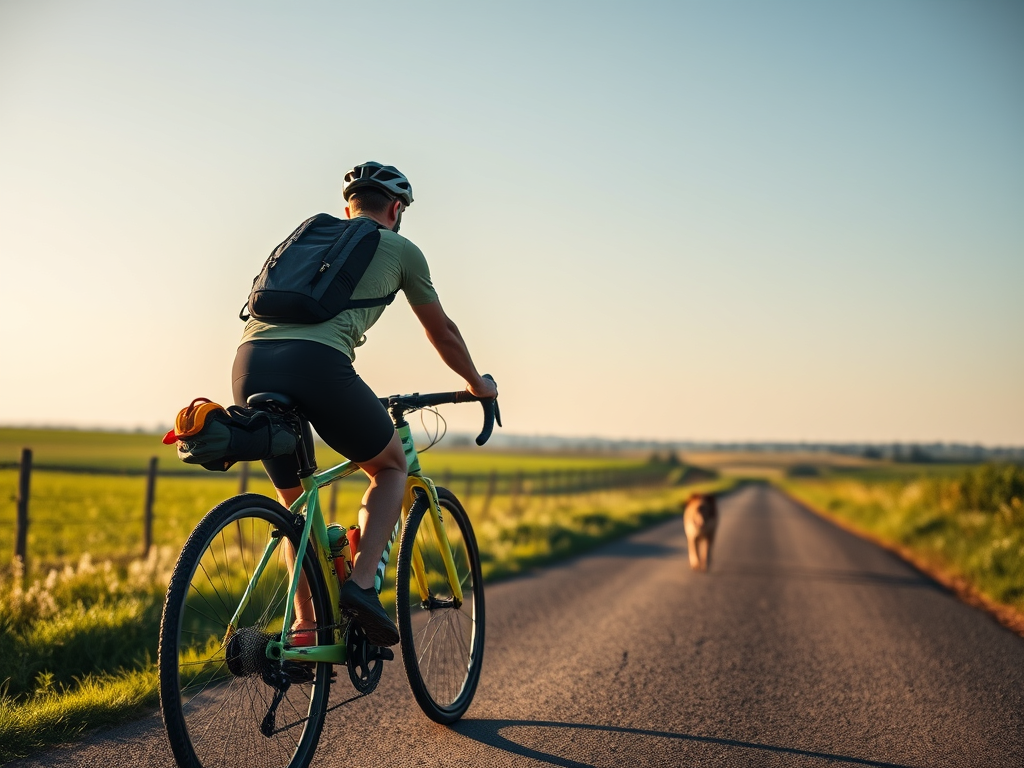
Through my years of outdoor adventures, I’ve encountered wolves in Belarus, aggressive drivers across multiple countries, and challenging weather conditions. Yet none of these experiences compare to the sheer unpredictability and frequency of dog attacks while cycling or hiking.
The reality of dog encounters:
- Dog attacks on cyclists and hikers are significantly more common than any other animal threat
- Most attacks happen in rural areas where dogs roam freely
- Cyclists are particularly vulnerable due to speed and the triggering effect of spinning wheels
- Many attacks result in serious injuries requiring medical attention
- The psychological impact often affects outdoor confidence for months or years
My Wake-Up Call: When “Friendly” Dogs Attack
The incident that changed my entire approach happened in Italy. While I was cycling peacefully, suddenly, a large dog charged.
That day taught me an important lesson. Having a proper dog attack prevention strategy isn’t just helpful. It’s absolutely essential for anyone who spends time outdoors.
Understanding Why Dogs Attack Outdoor Enthusiasts
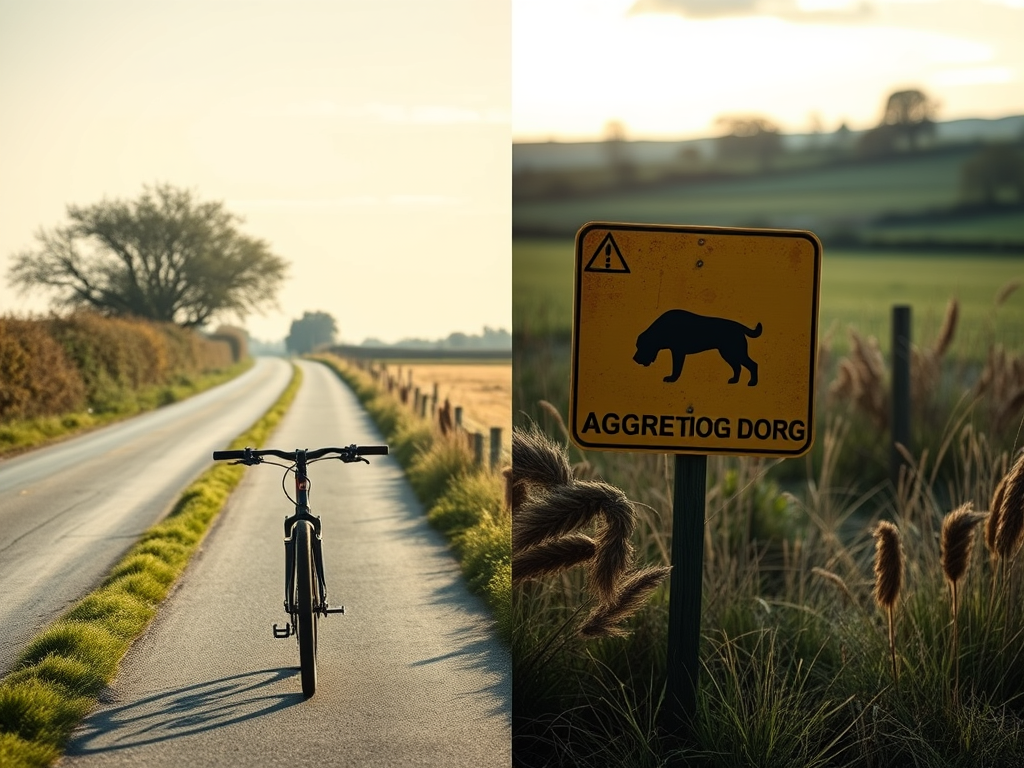
Through extensive research and personal experience, I’ve learned that dogs attack cyclists and hikers for specific, predictable reasons:
Territorial Protection Instincts
Dogs view moving bicycles and unfamiliar hikers as direct threats to their territory. This territory can be their property, street, or any general area they consider “theirs.”
Prey Drive Activation
The spinning wheels of bicycles, combined with speed and movement patterns, trigger ancient hunting instincts in many dogs. This is why cyclists face higher attack rates than pedestrians.
Pack Mentality Behavior
Individual dogs might not attack, but when multiple dogs are present, pack behavior significantly increases aggression levels and attack likelihood.
Poor Training and Socialization
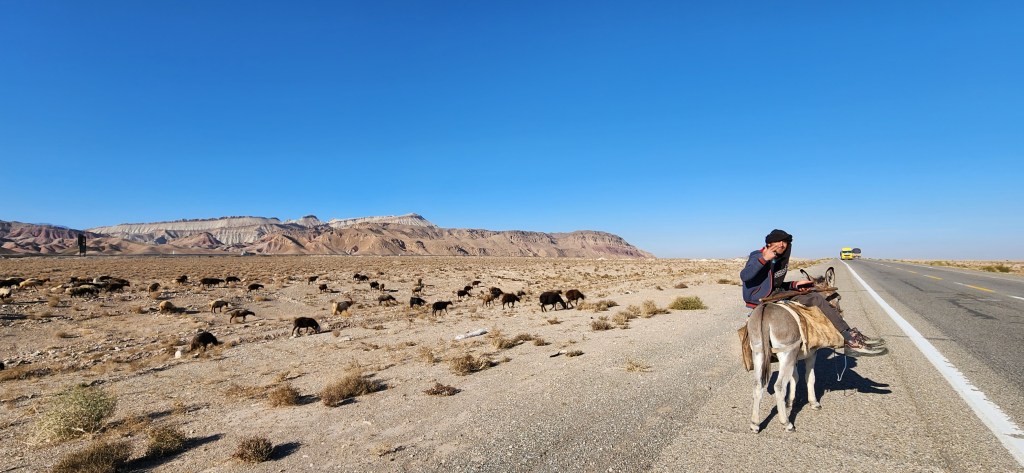
Many rural and suburban dogs have limited exposure to cyclists and hikers. This limitation makes them more likely to react with fear-based aggression.
Understanding these triggers has helped me anticipate and prevent most potential conflicts before they escalate.
Most Effective Dog Attack Protection Methods (Field-Tested)
The Wooden Stick Method (My Primary Defense)
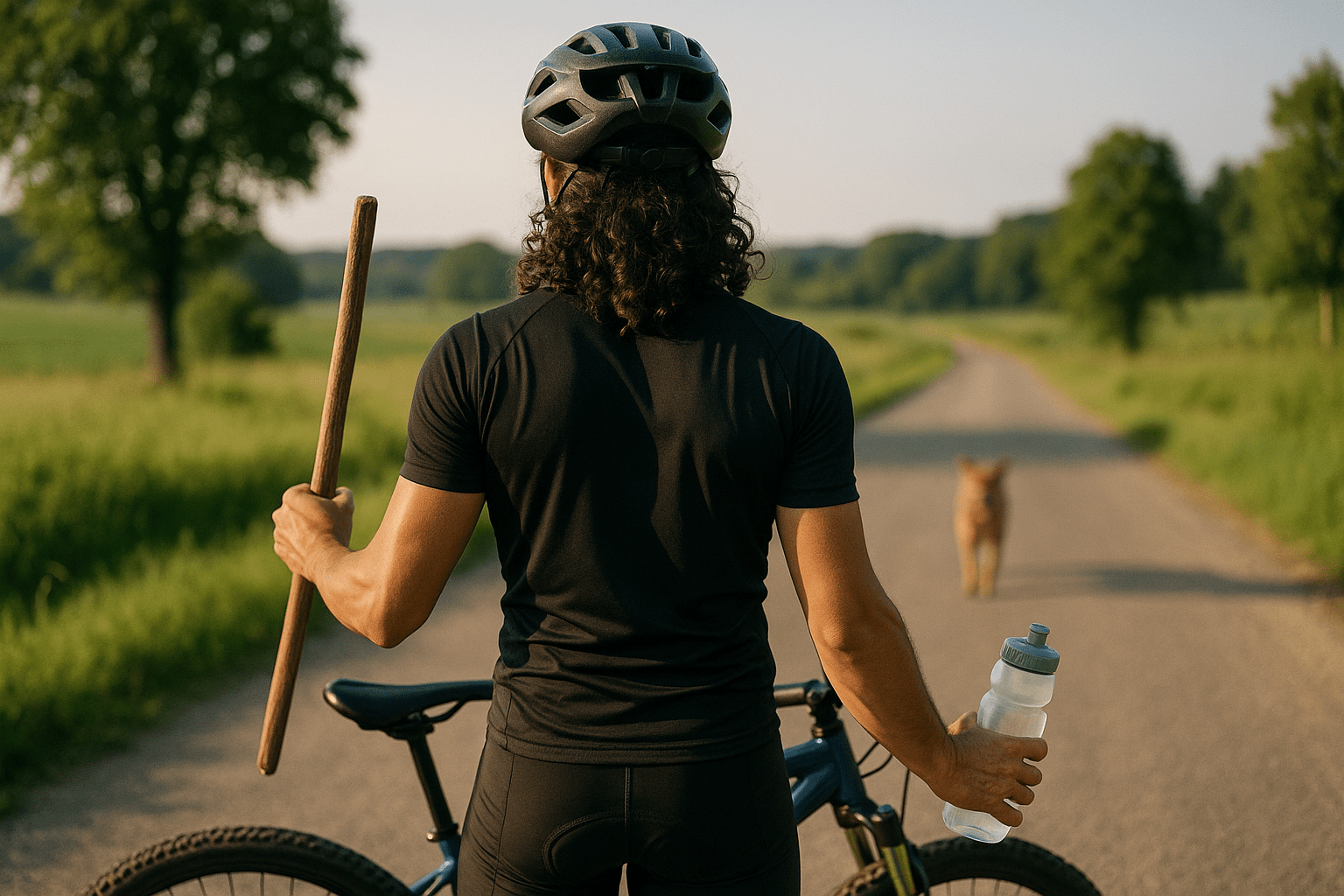
After testing multiple protection methods, a strong wooden stick remains my most reliable defense against aggressive dogs.
Why wooden sticks work so effectively:
- Dogs instinctively bite the stick first, protecting your body from injury
- Provides essential reach to keep aggressive dogs at a safe distance
- Creates a psychological barrier that many dogs naturally respect
- Doubles as hiking staff and camping tool for multi-purpose use
- Legal everywhere and doesn’t raise suspicions from authorities
My stick specifications for optimal protection:
- Length: 80-100cm (long enough for reach, manageable for bike mounting)
- Material: Hardwood like oak, ash, or hickory for maximum strength
- Thickness: 2-3cm diameter for optimal grip and striking power
- Finish: Smooth surface to prevent splinters, slightly tapered for comfort

Pepper Spray Protection (Reliable Backup)
High-quality pepper spray provides excellent backup protection, though legal restrictions vary significantly by country:
Critical effectiveness factors:
- Wind direction critically affects deployment success
- Range limitations require dogs to approach quite close
- Some dogs demonstrate higher tolerance to capsaicin effects
- Legal restrictions vary dramatically across countries
My preferred pepper spray specifications:
- Stream pattern rather than mist for accuracy and wind resistance
- Minimum 5 meters effective range
- Quick-access mounting system on bike frame
- Backup canister stored in easily accessible pocket
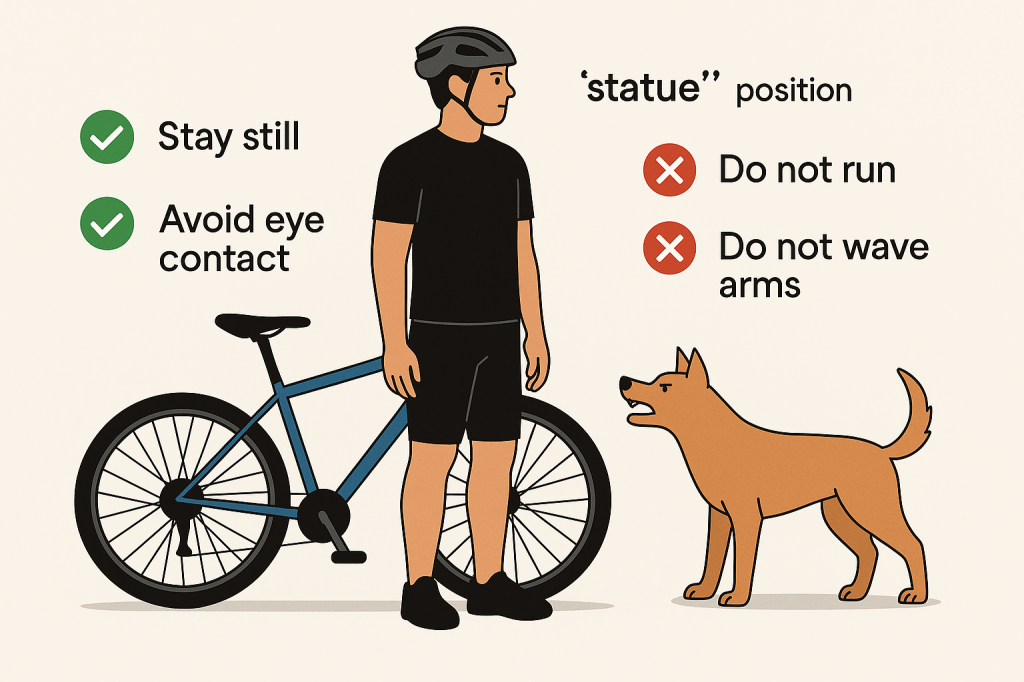
The “Complete Stillness” Strategy (Emergency Response)
When caught off-guard or in close proximity to aggressive dogs:
Statue positioning protocol:
- Stop all movement immediately and completely
- Avoid direct eye contact (interpreted as challenge by dogs)
- Keep hands visible, but avoid reaching toward the approaching dog
- Breathe slowly and maintain a calm demeanor
- Wait patiently for dog to lose interest and leave area
This technique has saved me multiple times when caught without primary defenses ready.
Secondary Protection Methods (Situational Effectiveness)
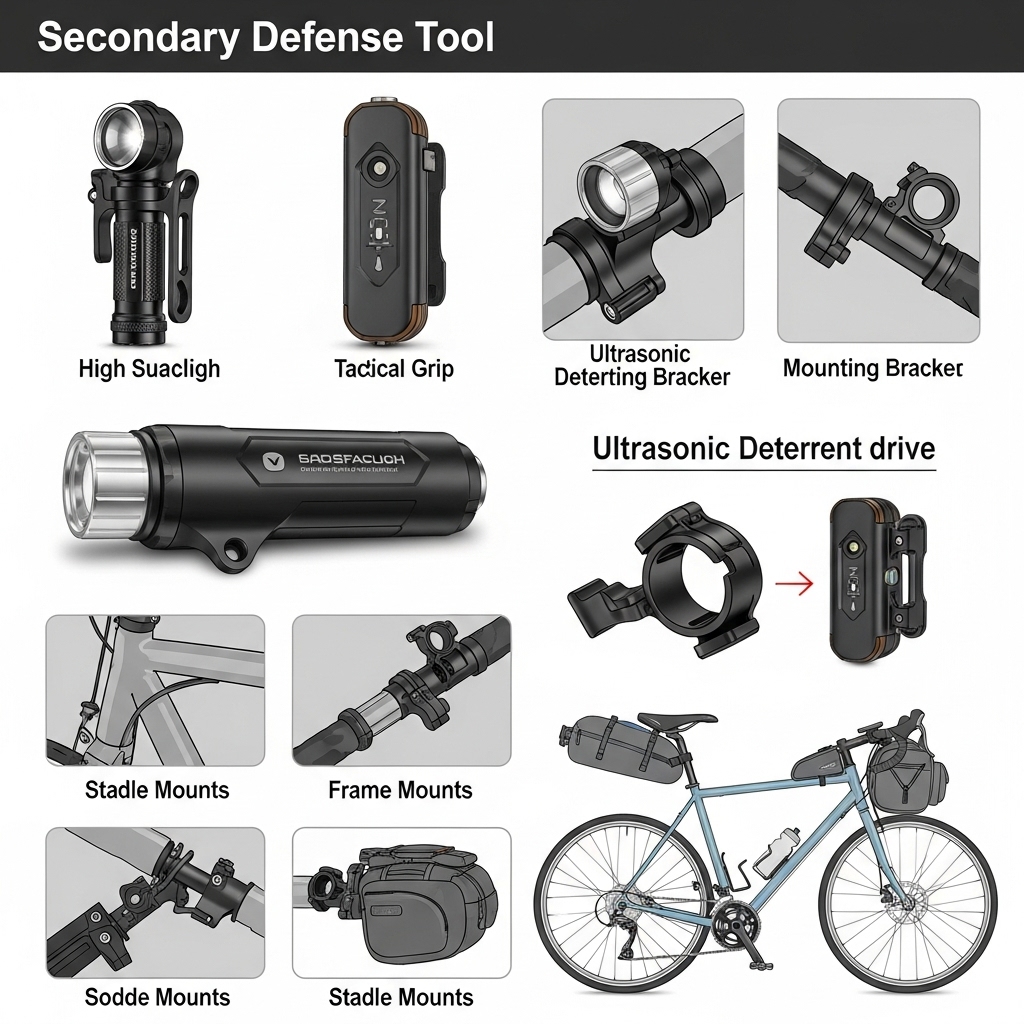
High-Powered Flashlight Technique
Bright flashlights can effectively disorient aggressive dogs, particularly useful during:
- Dawn and dusk cycling when many attacks typically occur
- Overcast conditions or heavily shaded trail areas
- Close-range encounters where pepper spray deployment isn’t viable
Optimal flashlight specifications:
- Minimum 1000 lumens output for maximum effectiveness
- Strobe function capability for enhanced disorientation
- Easy one-hand operation while cycling or hiking
- Rechargeable via dynamo hub or portable power bank
Ultrasonic Deterrent Devices
These specialized devices emit high-frequency sounds designed to deter aggressive dogs:
Mixed results from real-world testing:
- Highly effective on some dogs, completely ignored by others
- Battery life limitations during extended touring adventures
- Range restrictions require uncomfortably close proximity
- Most effective as supplementary rather than primary defense
Critical Mistakes That Escalate Dog Attacks
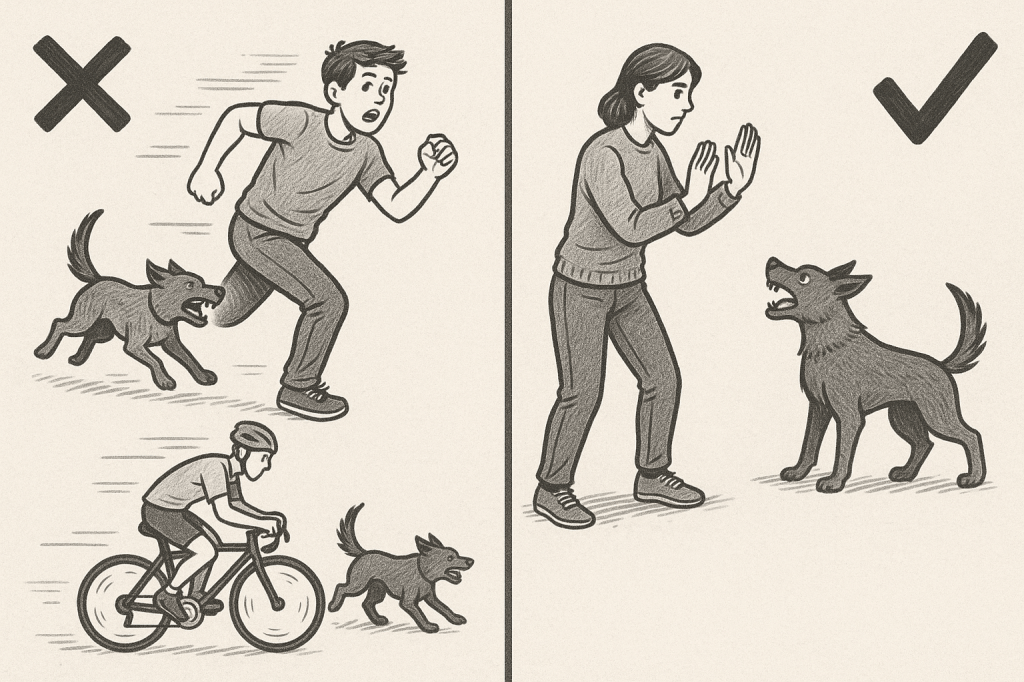
Never Run or Continue Cycling During Encounters
Running or cycling away during dog encounters triggers powerful prey drive instincts and escalates peaceful situations into aggressive chases.
Why running always fails:
- Activates deep hunting instincts in most dog breeds
- Humans cannot outrun determined dogs on foot
- Cycling away while dogs pursue often results in being knocked off bike
- Demonstrates fear and submission, encouraging continued aggression
Avoid Direct Eye Contact and Threatening Gestures
Direct eye contact is universally interpreted as a challenge by aggressive dogs. Waving arms, shouting, or making sudden movements often escalates rather than deters aggressive behavior.
Don’t Attempt to “Befriend” Clearly Aggressive Dogs
Friendly gestures toward obviously aggressive dogs frequently result in serious bite injuries. Reserve friendly approaches exclusively for clearly friendly, well-socialized dogs.
Prevention Strategies for Avoiding Dog Encounters
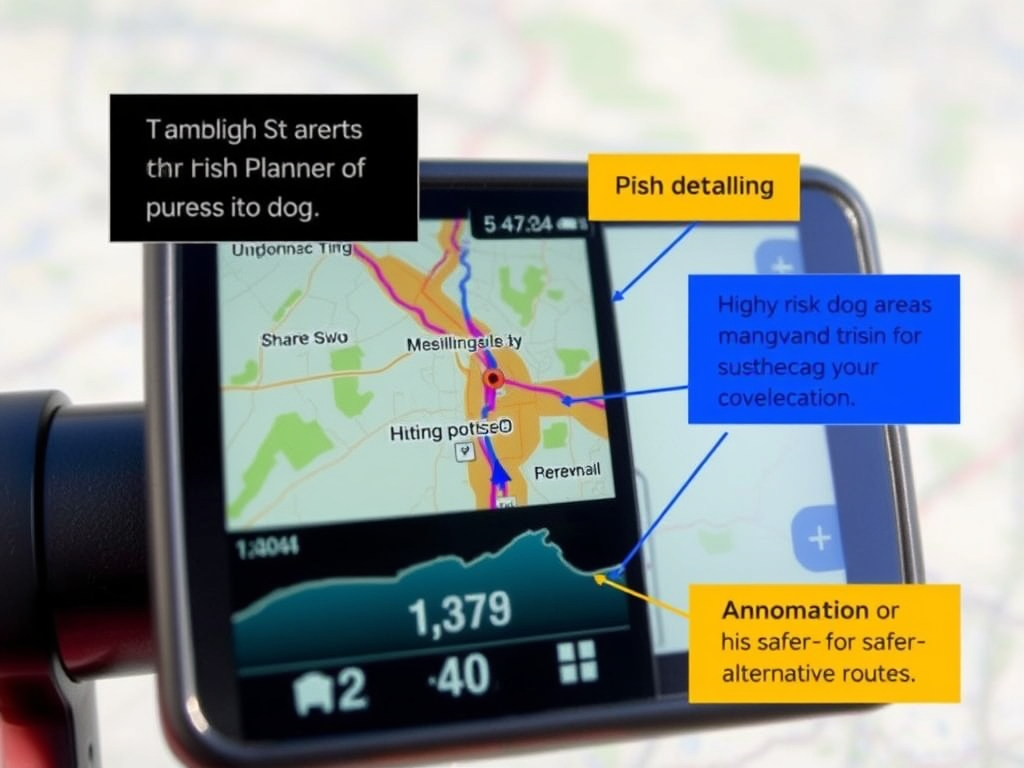
Strategic Route Planning
Through years of experience, I’ve learned to identify and systematically avoid high-risk areas:
High-risk locations to avoid:
- Rural residential areas with unfenced properties
- Farm roads and agricultural areas with working dogs
- Suburban neighborhoods with poor leash law enforcement
- Areas surrounding dog breeding facilities or training kennels
Optimal timing considerations:
- Early morning and evening hours have increased dog activity
- Feeding times (dawn and dusk) increase territorial behavior
- Weekend periods often feature more unleashed dogs in suburban areas
Pre-Adventure Preparation Checklist
Essential gear verification:
- Primary defense (wooden stick) easily accessible and secure
- Pepper spray properly mounted and functionality tested
- Secondary deterrents positioned within immediate reach
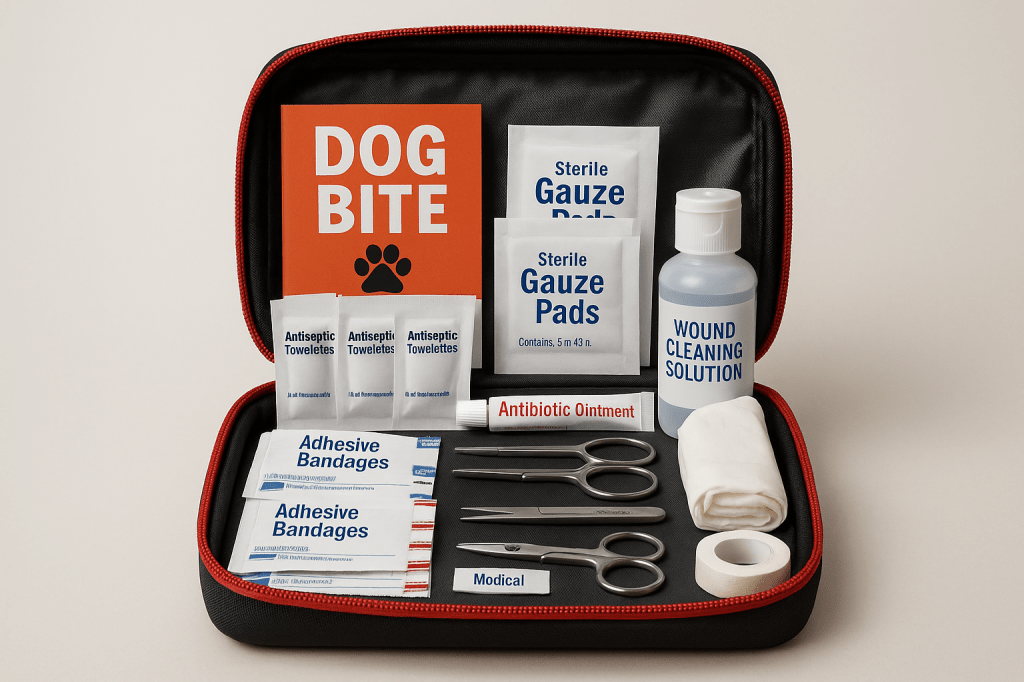
- Comprehensive first aid kit including antiseptic and bandages
- Get travel insurance, revolut offers a deal for it
Mental Preparation and Confident Energy
Dogs instinctively respond to confident, calm energy from humans. Nervous, fearful outdoor enthusiasts are statistically more likely to experience aggressive encounters.
Post-Encounter Response and Recovery
Immediate Medical Response to Dog Bites
Critical medical priorities:
- Stop active bleeding using direct pressure techniques
- Clean all wounds thoroughly with antiseptic solution
- Document injuries comprehensively with clear photographs
- Seek immediate medical attention for deep punctures or infection signs
Essential legal documentation:
- Report incidents promptly to appropriate local authorities
- Gather comprehensive witness contact information when available
- Document property owner information and incident location
- Photograph scene thoroughly including any property damage
Psychological Recovery After Traumatic Encounters
Dog attacks can devastatingly impact outdoor confidence and adventure enthusiasm.
Effective recovery strategies:
- Begin with familiar, verified low-risk routes
- Ride or hike with experienced, supportive adventure partners
- Gradually rebuild confidence in carefully controlled environments
- Consider professional counseling for severe trauma or persistent fears
Regional Differences and Legal Considerations
European Country Legal Variations
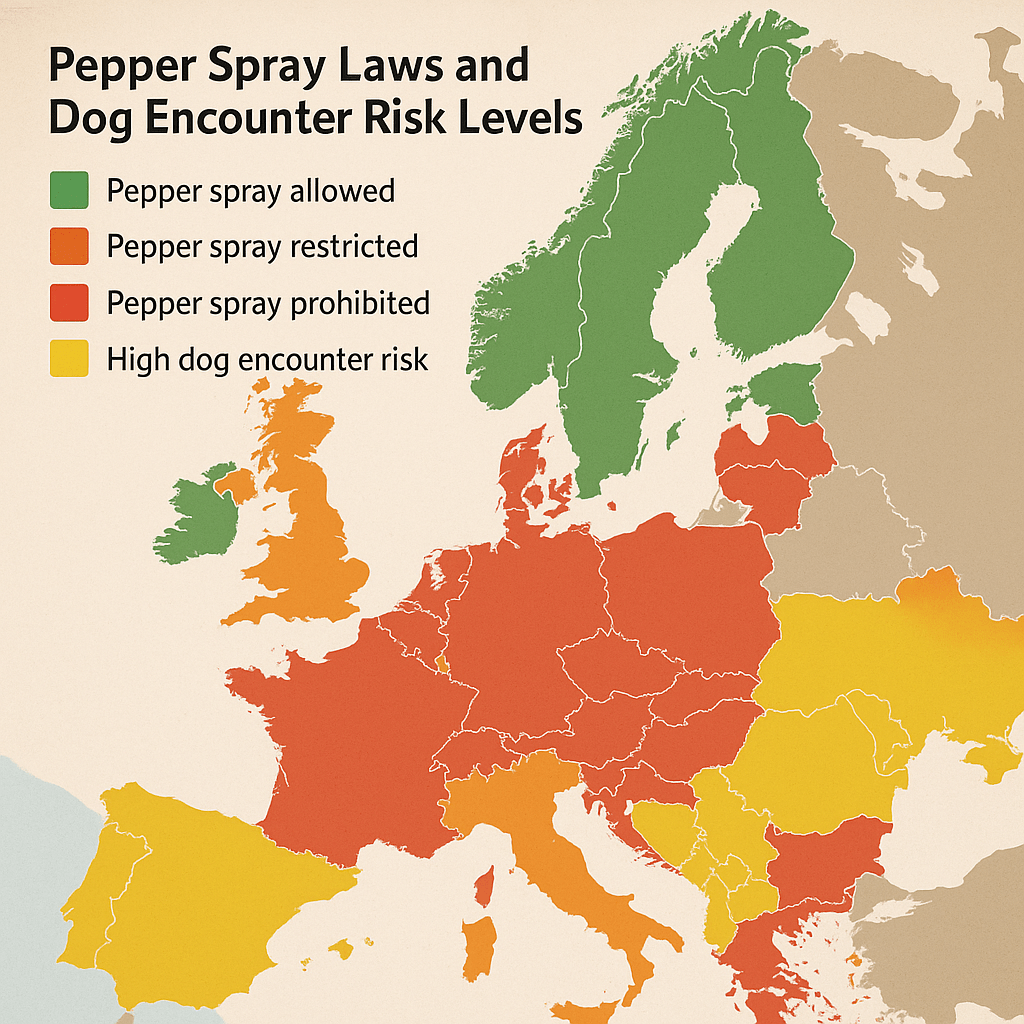
Pepper spray legality across Europe:
- Germany: Legal for animal defense purposes
- France: Restricted use, requires special license
- United Kingdom: Illegal for civilian possession
- Italy: Legal with specific restrictions and regulations
- Always research current laws before international touring
Cultural attitudes toward dog management:
- Eastern Europe: More free-roaming dogs, significantly higher encounter risk
- Scandinavia: Excellent leash law enforcement, substantially lower risk
- Mediterranean: Variable enforcement, seasonal differences in tourist areas
International Adventure Considerations
When planning international bike touring or hiking adventures, research local dog populations, leash law enforcement, and available legal defense options well in advance.
Building Your Complete Dog Defense Kit
Essential Equipment (Budget Under €50)
Primary defense stick: €15-25
- Source local hardwood from lumber suppliers
- Sand smooth and apply protective finish
- Add reflective tape for enhanced visibility
Quality pepper spray: €15-20
- Research legal options specific to your region
- Include backup canister for extended adventures
- Practice deployment technique in safe environment
High-powered flashlight: €10-15
- Rechargeable via bike dynamo system
- Minimum 1000 lumens output capability
- Essential strobe function for disorientation
Advanced Upgrades (€50-100 Budget)
Professional ultrasonic deterrent: €25-35
Law enforcement grade pepper spray: €30-40
Custom stick with integrated mounting system: €20-30
Training and Skill Development Protocol
Practice
Essential skill development:
- Stick deployment techniques while cycling
- Pepper spray accuracy training in various conditions
- “Statue” positioning practice and breath control
- Equipment accessibility and quick deployment checks
Scenario-Based Training Exercises
Practice diverse encounter scenarios:
- Single aggressive dog confrontation
- Multiple dog pack situations
- Owner-present conflict situations
- Urban versus rural environment differences
Final Thoughts: Mastering Outdoor Safety
I have traveled thousand of kilometers. I’ve had dozens of dog encounters across multiple countries. I can confidently say that proper preparation and training transform these terrifying situations into manageable challenges. The key lies in maintaining multiple defense options, staying calm under pressure, and never underestimating potential dangers.
Dog encounters don’t have to end your outdoor adventures or touring dreams. With comprehensive knowledge, proper equipment, and practiced techniques, you can handle these situations confidently. You can continue to enjoy the incredible freedom that cycling and hiking provide.
The investment in proper dog defense equipment and training is minimal. It is small compared to potential medical costs and psychological trauma from serious attacks. Every outdoor enthusiast should develop and maintain a comprehensive strategy for dealing with aggressive dogs.
Remember: our goal isn’t to harm dogs unnecessarily, but to protect ourselves while effectively de-escalating dangerous situations. Most dogs are wonderful animals, but when exploring unfamiliar territories, preparation for dangerous exceptions could literally save your life.
Quick Reference Emergency Guide
Essential Defense Kit:
- Hardwood stick (80-100cm length)
- Pepper spray (where legally permitted)
- High-powered flashlight with strobe
- Comprehensive first aid supplies
Encounter Response Protocol:
- Stop cycling or hiking movement immediately
- Deploy primary defense (wooden stick)
- Avoid direct eye contact with aggressive dog
- Maintain calm, confident demeanor
- Back away slowly when situation permits
Prevention Checklist:
- Plan routes avoiding identified high-risk areas
- Carry and maintain proper defense equipment
- Stay constantly alert in rural and suburban areas
- Practice defense techniques regularly for muscle memory
Have you experienced dog encounters during your outdoor adventures?
What protection techniques proved most effective for your situations?
Share your experiences and additional safety tips in the comments below.
Your story could help keep fellow outdoor enthusiasts safe during their adventures!
 CyclOrbit