
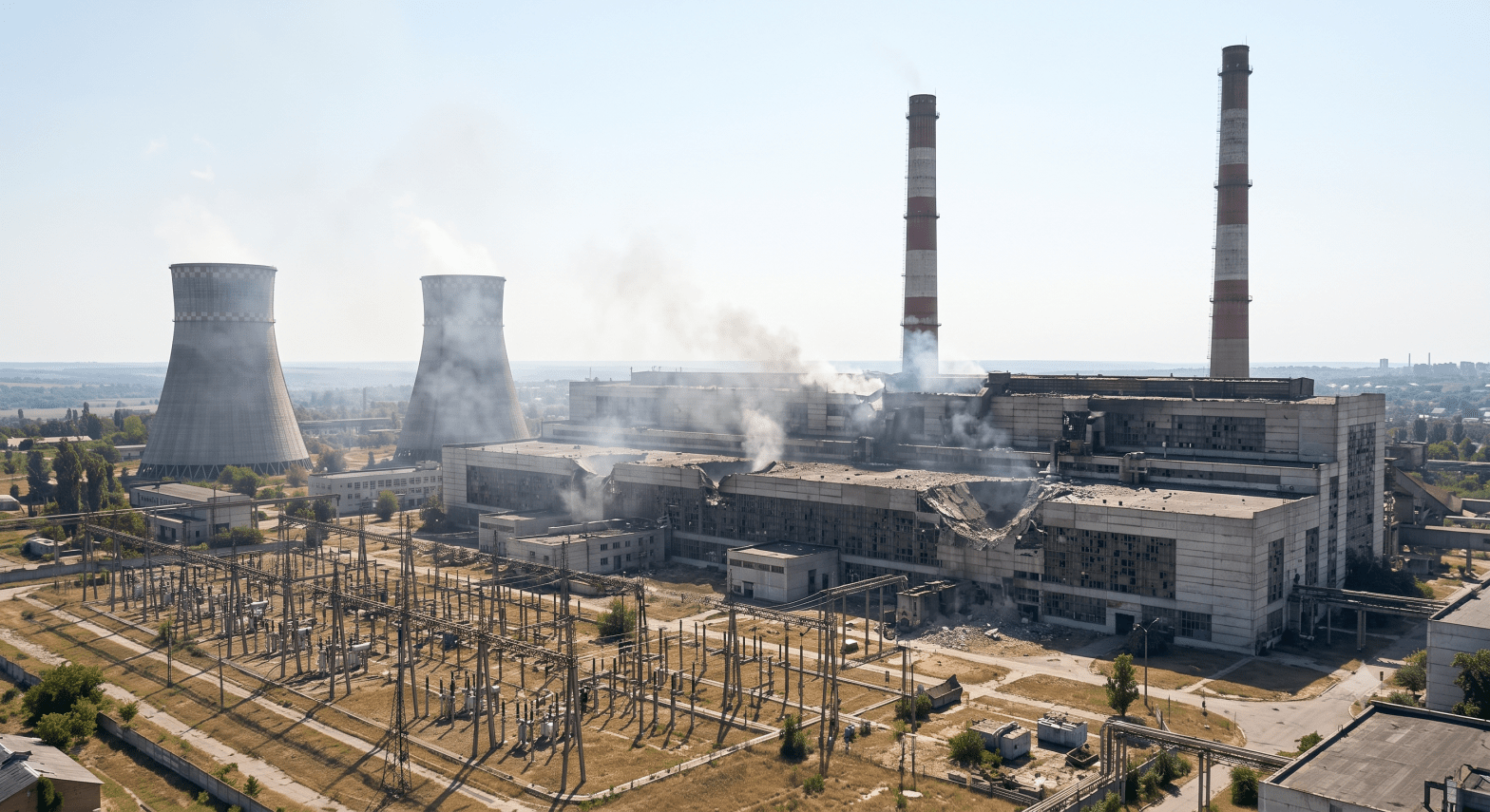
As scorching summer heatwaves sweep across Europe, pushing electricity grids to their absolute limits, Ukraine is facing a brutal and invisible frontline battle. While international headlines often fixate on winter heating crises, the reality right now is an acute summer power crisis.
Intensified Russian drone and missile strikes targeting energy infrastructure have systematically destroyed roughly half of the country’s total power generation capacity. With attacks on energy facilities surging significantly this year—often deploying 20 to 25 explosive drones simultaneously against single targets—rolling blackouts have become a daily reality for millions, even far away from active frontlines.
Yet, amid this relentless destruction, a powerful, hopeful counter-narrative is taking shape: decentralized energy resilience.
1. The New Realities of Summer: Heatwaves and Blackouts
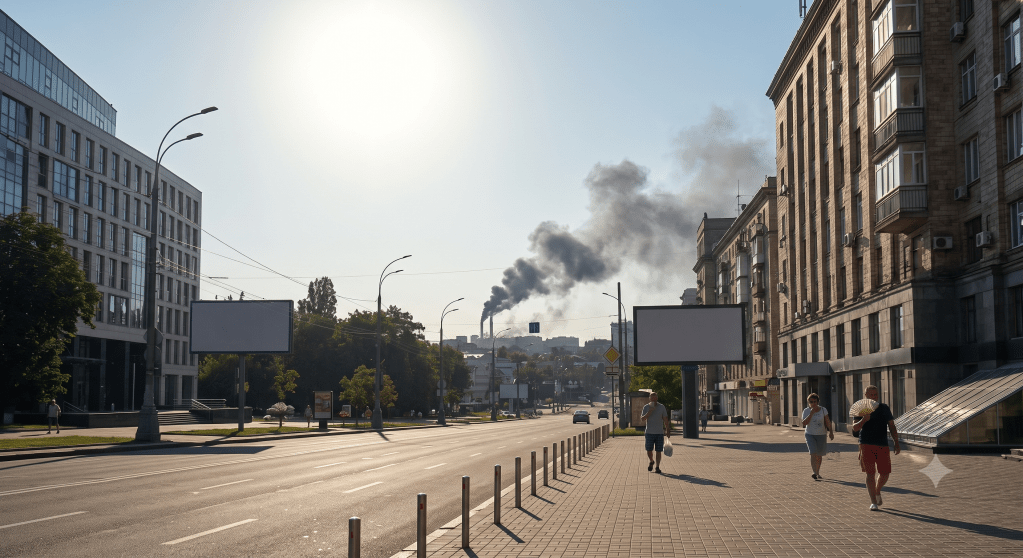
The strategic picture has shifted. Russia’s goal is no longer just to freeze Ukraine in the winter; it is to cripple the nation’s economy and morale during the peak consumption months of summer.
Air conditioning units are running at maximum capacity across the country, pushing electricity demand to historic breaking points. This surge in demand, combined with the catastrophic loss of generation capacity from targeted strikes, means the grid simply cannot cope.
The result is rolling blackouts. These are not just inconveniences; they impact water supply, refrigeration, hospitals, and public transportation. The grid is under siege.
2. The Fragility of Centralized Power
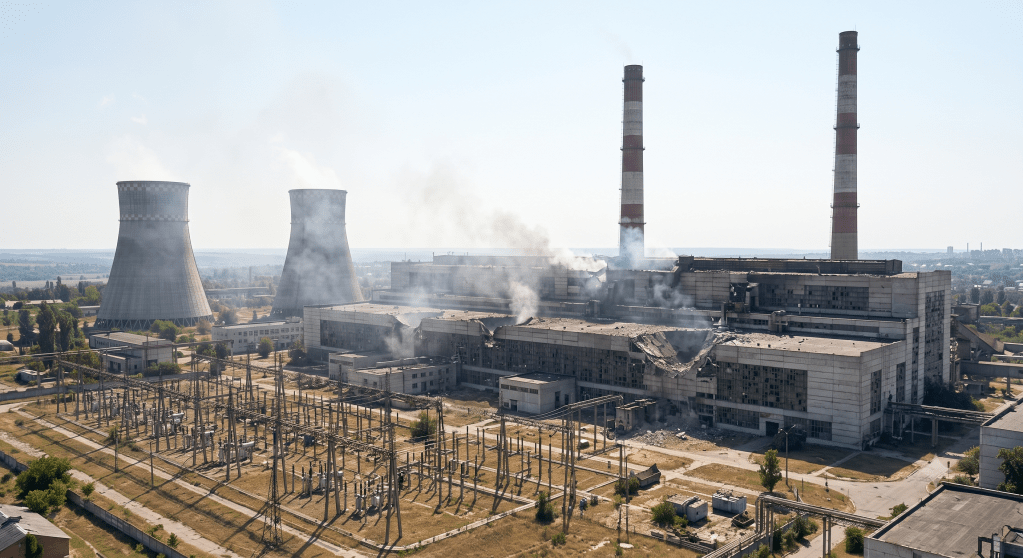
To understand why Ukraine is pivoting toward renewables, you have to understand the target. Traditional power grids rely on massive, centralized facilities—huge thermal, nuclear, or hydro plants that send power over vast distances via vulnerable high-voltage lines.
In a modern conflict, these plants are sitting ducks. They are single points of failure. As the image above illustrates, when a centralized facility is hit, an entire region instantly loses its power source.
Rebuilding these massive, concrete-and-steel behemoths takes years and billions of dollars, making them impossible to repair quickly under constant threat. A different approach is required for wartime survival.
3. The Hopeful Twist: Ukraine’s Decentralized Revolution
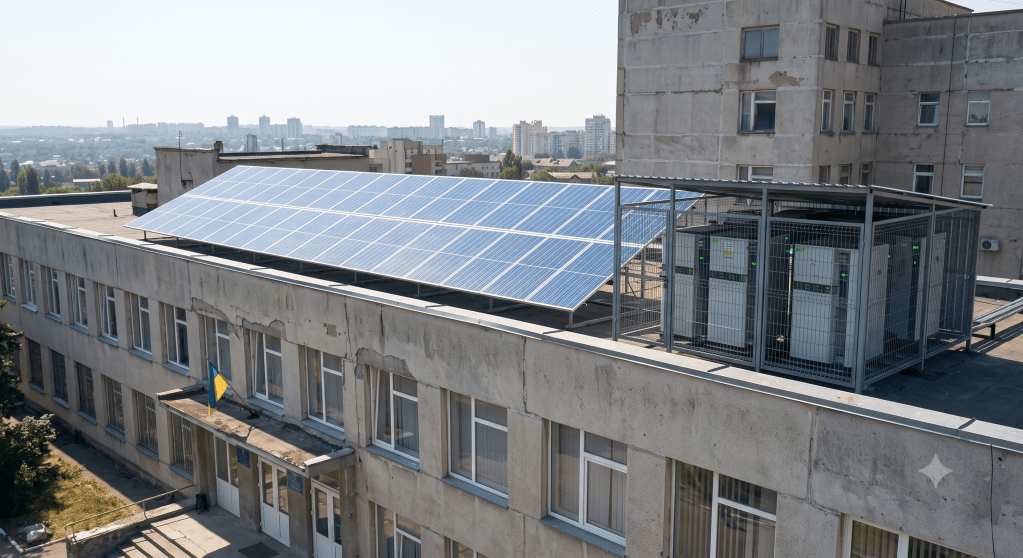
Ukraine’s response to this infrastructure terrorism has been swift, pragmatic, and technologically advanced. They are bypassing the need to rebuild vulnerable centralized plants by embracing distributed energy resources paired with battery storage.
Instead of relying on the main grid, critical public institutions, municipalities, and local communities are racing to install rooftop photovoltaic systems. These systems are integrated with industrial-scale battery storage units (BESS).
The Ukrainian government has already commissioned its first 14 major solar power stations with integrated battery storage across eight distinct regions. The goal is straightforward: guarantee that hospitals, administration centers, and water pumping stations stay online, regardless of what happens to the main high-voltage lines.
This transforms the national grid from a fragile, top-down structure into a resilient network of independent microgrids. You can bomb a centralized plant, but you cannot easily knock out thousands of independent, localized power stations.
4. Why Solar + Storage is the Ultimate Wartime Strategy
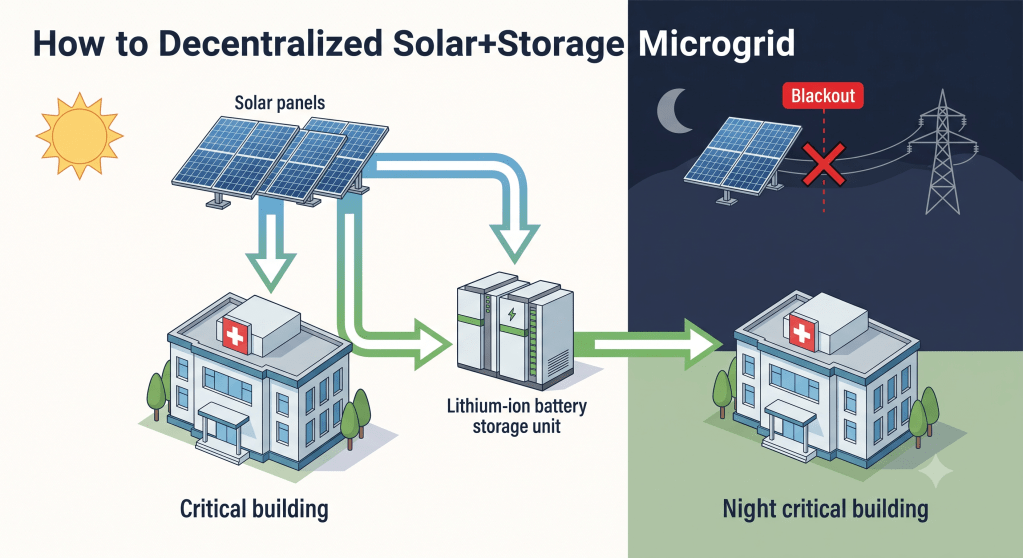
From a technical standpoint, pairing solar with storage isn’t just a “green initiative”—it’s a matter of survival physics.
As illustrated in the schematic, decentralized solar offers three critical wartime advantages:
- Generation at the Point of Use: By generating electricity right where it’s consumed, you bypass vulnerable long-distance transmission lines entirely.
- The Summer Synergy: Solar output naturally peaks during long summer days, perfectly aligning with the spike in air conditioning load. The batteries store excess midday energy to smooth out the curve into the evening.
- Hardened Infrastructure: A small array on a hospital roof is an infinitely harder target for a drone swarm than a massive, monolithic power plant.
Decentralization equals national security.
Conclusion: How You Can Help Keep Ukraine Lit
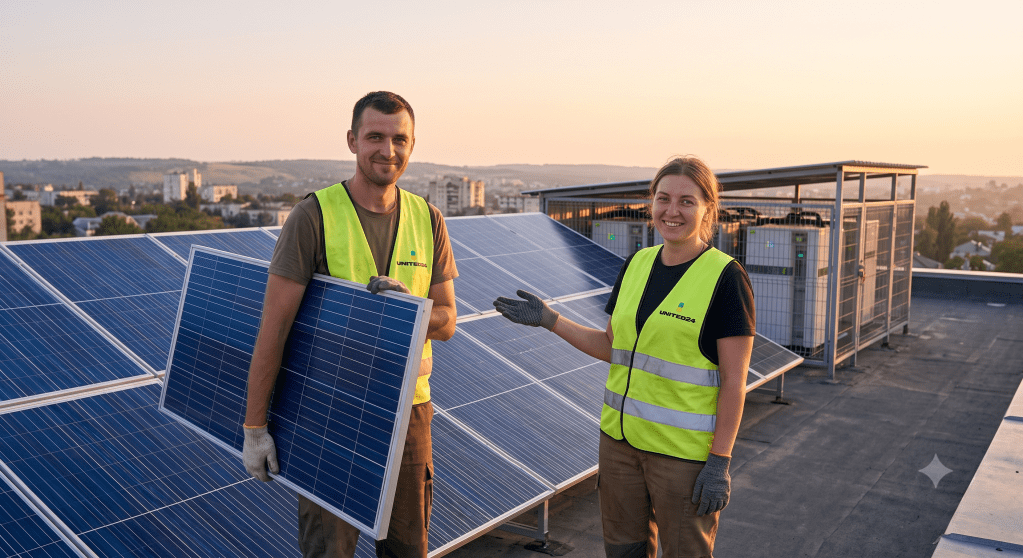
This summer, the fight for Ukraine’s stability isn’t just fought with air defense systems; it’s fought with every kilowatt-hour that is generated and stored locally, keeping the lights of civil society on despite the attacks.
This story is personal for anyone in the renewables industry. We know that clean, distributed energy is not just about reducing carbon—it is the most resilient, fastest-to-deploy power system available.
If you want to support practical, long-term solutions that keep Ukrainian hospitals and shelters running through the blackouts, you can contribute directly to the reconstruction efforts.
👉 Support Ukraine’s Energy Reconstruction via UNITED24 — Help fund the next wave of decentralized solar stations and battery storage systems protecting civilian infrastructure.

